beef cutting instructions
Mastering beef cutting transforms large carcasses into usable portions. This guide provides foundational knowledge for efficient processing, enhancing culinary skills and maximizing value.
Benefits of Home Beef Butchering
Home beef butchering offers substantial economic advantages, allowing for bulk purchases and custom cuts tailored to individual needs. This hands-on approach ensures superior freshness and complete control over the quality and specific portions, surpassing typical supermarket offerings. Moreover, it fosters a deeper understanding of meat origins and promotes sustainable consumption by maximizing the use of each animal. While political discussions, like those from December 17 and 18, 2025, and June 3, 2025, may dominate headlines, the practical skills of fabricating beef remain invaluable. This ancient tradition, thriving even today on January 11, 2026, empowers individuals with self-sufficiency and culinary mastery, providing long-term satisfaction and healthier eating options.
Common Terms in Beef Fabrication
Understanding common terms is crucial for effective beef fabrication. A ‘carcass’ refers to the dressed body of the animal, often split into ‘sides’ and subsequently ‘quarters’ – forequarter and hindquarter. ‘Primal cuts’ are the initial large sections, such as chuck or loin, from which ‘subprimal cuts’ are further derived. The entire process of breaking these down into consumer-ready portions is known as ‘fabrication’. ‘Marbling’ describes the desirable intramuscular fat that enhances flavor and tenderness. ‘Yield grade’ assesses the proportion of lean meat to fat and bone, while ‘cutability’ refers to the percentage of retail cuts. These terms are foundational for anyone engaging in beef processing, a skill timeless and essential, just as current events unfold in late 2025 and early 2026.

Essential Tools and Equipment
Proper beef cutting requires sharp knives, sturdy cutting boards, and a reliable meat saw. Investing in quality equipment ensures precision, efficiency, and safety during the entire butchering process.
Knives for Beef Cutting
Selecting the right knives is paramount for effective and safe beef butchering. A sharp, high-quality set reduces effort and ensures clean cuts. Essential knives include a breaking knife (8-10 inches) for initial separation of large primals. A boning knife, with its flexible or stiff blade (6-8 inches), is crucial for separating meat from bone precisely. For slicing roasts and steaks, a long, thin slicing knife (10-14 inches) is indispensable. A skinning knife, often shorter and curved, aids hide removal. Stainless steel blades are preferred for hygiene and durability, coupled with ergonomic, non-slip handles for secure grip. Regular sharpening and proper cleaning are vital for maintaining edge integrity and preventing contamination, making the process smoother for any dedicated home butcher.
Cutting Surfaces and Saws
Proper cutting surfaces are fundamental for safe and hygienic beef fabrication. A large, stable, and easily sanitized surface is critical. High-density polyethylene (HDPE) boards are preferred for their durability, non-porous nature, and ease of cleaning, which prevents bacterial growth. Thick hardwood butcher blocks, particularly end-grain, also provide an excellent surface, being kind to knife edges and robust enough for heavy use. Ensure the surface is non-slip and ample for large primal cuts. For bone work, a sturdy meat saw is indispensable. Manual bone saws offer precision for home butchers, ideal for splitting carcasses or bone-in sections. For higher volume, electric band saws are used, demanding strict safety protocols. Always keep saws sharp and meticulously clean both surfaces and saws to prevent cross-contamination and ensure longevity.

Safety Protocols for Beef Butchering
Safety protocols are vital for beef butchering. Use sharp tools carefully, wear appropriate protective gear, and maintain a spotless, organized workspace to prevent injuries.
Personal Protective Equipment
Personal protective equipment (PPE) is crucial for safe beef butchering. Cut-resistant gloves, often mesh, are paramount for hand protection against sharp knives, preventing severe cuts. A waterproof apron shields clothing and skin from blood and fat, ensuring hygiene. Safety glasses or a face shield protect eyes from splashes and debris. Non-slip, waterproof boots provide stable footing on wet surfaces, reducing fall risks. A clean hairnet prevents meat contamination. Always confirm PPE is correctly worn and maintained for utmost safety and sanitation during fabrication.
Sanitation and Hygiene Practices
Strict sanitation and hygiene are paramount in beef butchering to prevent contamination and ensure food safety. All tools, cutting surfaces, and equipment require thorough cleaning and sanitizing before and after each use. This involves washing with hot, soapy water, rinsing, and applying a food-grade sanitizer. Frequent hand washing is essential, especially after handling raw meat or touching non-food contact areas. Workspaces must remain clean and free of debris, with prompt waste disposal. Adhering to cleaning protocols minimizes bacterial growth, upholding product quality and consumer health standards throughout the cutting process, preventing spoilage.
Understanding Beef Primal Cuts
Understanding beef primal cuts is crucial for efficient butchering. These large sections dictate subsequent smaller cuts, maximizing yield and value from the carcass effectively for today’s market.
Identifying Major Primal Sections
Identifying major primal sections is fundamental for efficient beef butchering. These large, initial divisions guide subsequent cutting processes. Key primals include the chuck, located in the shoulder, known for its robust flavor; the rib, yielding tender steaks and roasts; and the loin, which provides premium cuts like sirloin and tenderloin. Further back, the round offers lean meat suitable for various preparations. Below, the brisket requires slow cooking for tenderness, while the plate yields skirt steak and short ribs. Finally, the flank, a lean abdominal muscle, completes the primary breakdown. Understanding each primal’s characteristics ensures optimal utilization of the entire carcass, maximizing both value and culinary potential.
Breaking Down the Chuck Primal
Breaking down the chuck primal involves separating it into smaller, manageable sections. This large shoulder cut yields various roasts and steaks, ideal for slow cooking and versatile grinding.
Chuck Roast and Steak Cuts
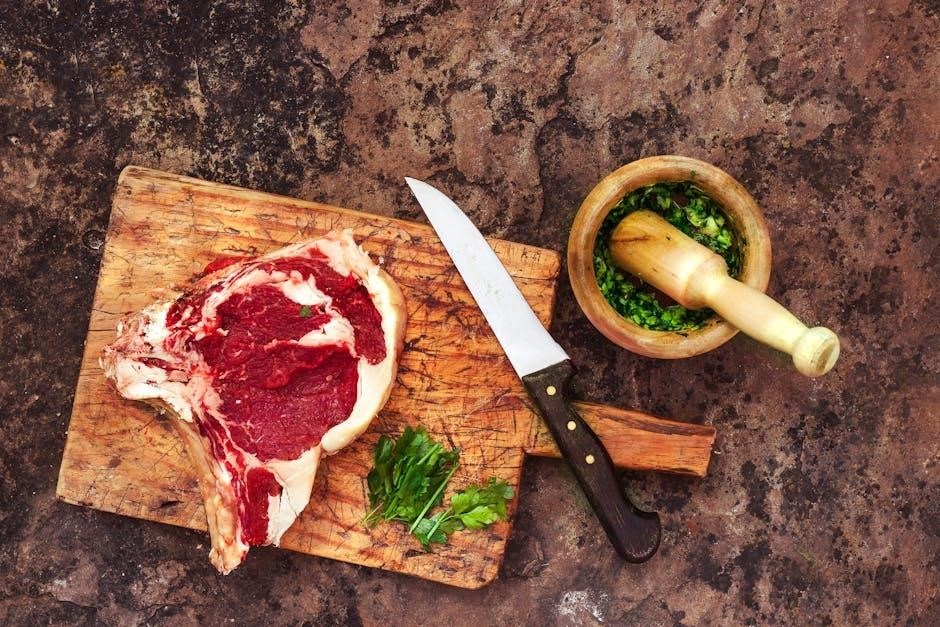
From the chuck primal, several desirable cuts emerge. The classic chuck roast, sourced from the shoulder, excels with slow cooking, such as braising or stewing, producing exceptionally tender, flavorful meat. For steaks, the chuck eye, often called the “poor man’s ribeye,” offers great marbling and tenderness when grilled quickly. The flat iron steak, derived from the top blade, is surprisingly tender and perfect for searing. The Denver steak, another well-marbled selection from the underblade, is also growing in popularity due to its rich taste and versatility. Precise butchering techniques are essential to isolate these distinct muscle groups, optimizing their culinary application and ensuring maximum enjoyment from this diverse section of beef.
Cutting the Rib Primal
Cutting the rib primal involves separating the main rib section from the chuck and loin. This crucial step prepares the way for creating premium ribeye steaks and roasts with precision.
Ribeye Steaks and Roasts
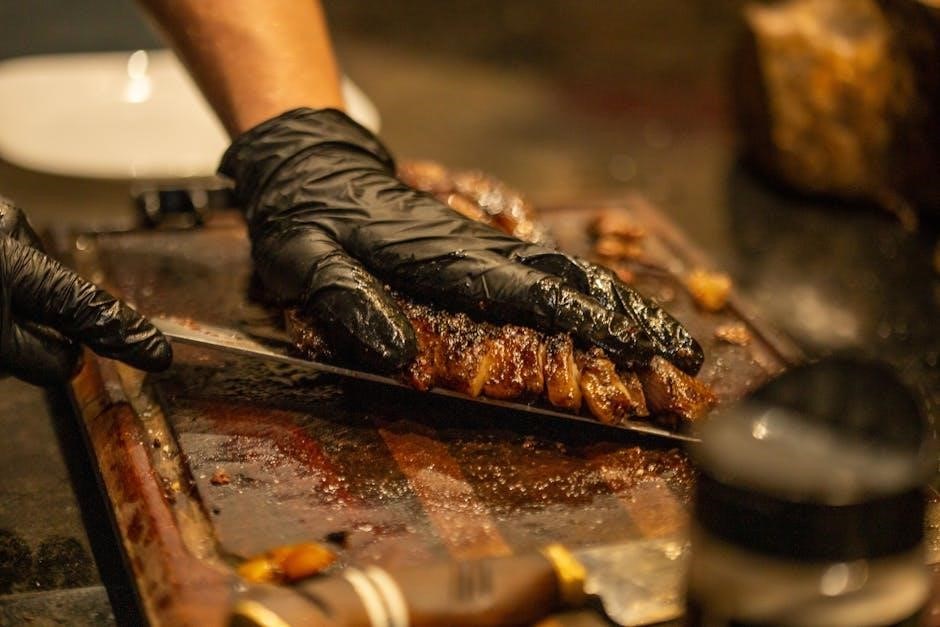
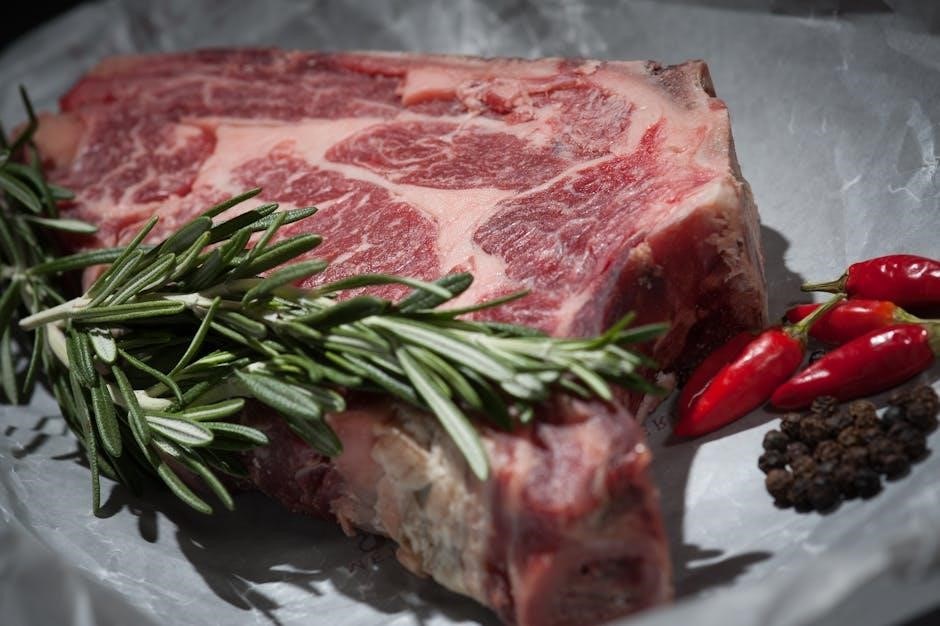
From the rib primal, crafting exquisite ribeye steaks and roasts requires careful technique. To prepare boneless ribeye steaks, first remove the bones by tracing along their length with a sharp boning knife. Once the bones are detached, the large muscle can be sliced into individual steaks, typically 1 to 1.5 inches thick, ensuring uniform cooking. For bone-in steaks, a band saw or a heavy cleaver is used to cut directly through the bones, creating impressive cowboy or tomahawk cuts. When preparing a ribeye roast, the entire primal section, or a significant portion of it, is left intact, often with the bones still attached for enhanced flavor and presentation during roasting. Proper trimming of excess fat and silverskin is essential to achieve a tender and flavorful final product, whether a single steak or a grand roast. Precision in these steps guarantees a high-quality cut for any culinary application, making the most of this prime beef section.
Processing the Loin Primal
Processing the loin primal yields premium cuts. This section focuses on carefully separating the tenderloin, sirloin, and short loin, maximizing the value of these highly desired beef portions.
Sirloin and Tenderloin Fabrication
The sirloin and tenderloin are highly prized cuts from the beef loin primal, celebrated for their exceptional tenderness and rich flavor. Fabricating these begins with carefully separating the entire tenderloin, a delicate muscle, from the underside of the short loin and sirloin. Precise knife work is essential to remove silver skin and excess fat, preparing it for exquisite filet mignon steaks or elegant roasts. Next, the larger sirloin section is broken down. This yields the versatile top sirloin, ideal for grilling steaks, and the bottom sirloin, suitable for roasts or smaller, quick-cooking cuts. Meticulous fabrication ensures minimal waste, maximizing the yield of these high-value portions. Mastering these techniques transforms the primal into restaurant-quality cuts, essential for any enthusiast or professional butcher.
Porterhouse and T-Bone Steaks
The iconic Porterhouse and T-Bone steaks are distinguished cuts sourced from the short loin primal. Both feature a distinctive T-shaped bone separating two highly desirable muscles: the tenderloin and the strip loin. The primary difference lies in the size of the tenderloin portion; a Porterhouse steak must have a tenderloin section at least 1.25 inches thick at its widest point, while a T-Bone requires a minimum of 0.5 inches. To fabricate these, the short loin is typically cross-cut using a band saw or a heavy-duty butcher knife, ensuring consistent thickness for even cooking. These substantial steaks offer a unique dining experience, combining the rich flavor of the strip with the unparalleled tenderness of the tenderloin in a single impressive cut.
Fabricating the Round Primal
The beef round primal, a large lean section, is broken down into various cuts. This process yields steaks and roasts ideal for diverse culinary applications.
Round Steaks and Roasts
The round primal, known for its leanness, is expertly fabricated into numerous versatile cuts suitable for various cooking methods. From the top round, skilled butchers carefully slice lean, flavorful steaks, often prepared as London Broil, or trim larger sections for roasting. The bottom round yields robust roasts, perfect for slow cooking, or can be further processed into quality ground beef for maximum utilization. The eye of round, a very lean muscle, is typically prepared as a compact roast, offering a tender texture when cooked properly. Additionally, the sirloin tip, also known as the knuckle, provides excellent material for both steaks and smaller roasts. Precise cuts ensure optimal tenderness and portion control.
Utilizing Flank, Plate, and Brisket
These versatile cuts provide unique culinary opportunities. Flank and skirt steaks are excellent for grilling, while brisket is a prime choice for smoking or braising, maximizing flavor and yield.
Flank Steak and Skirt Steak
Flank and skirt steaks, from the steer’s abdominal area, offer unique textures and rich flavors. Flank steak, a lean, flat muscle, requires precise slicing against the grain post-cooking for tenderness. It notably excels in marinated dishes and quick grilling. Skirt steaks, inside and outside varieties, are known for intense beefy taste. The wider outside skirt features a tough membrane requiring meticulous removal. These versatile cuts are perfect for fajitas, stir-fries, and searing. Proper trimming of fat and silver skin is crucial. Correct slicing technique is essential to unlock tenderness and full flavor from these popular cuts.
Brisket Preparation for Smoking
Preparing brisket for smoking is crucial for a tender, flavorful result. Begin by selecting a full packer brisket, comprising both the flat and point sections. Trim excess hard fat, leaving about a quarter-inch uniform fat cap on the point for moisture retention. Carefully remove silver skin and any overly thick, undesirable fat pockets between the muscles, being careful not to cut too deep into the lean meat. A meticulously well-trimmed brisket ensures even cooking and promotes excellent bark formation during the long smoking process. Season generously with a robust rub of your choice, allowing it to rest for several hours or even overnight. This careful preparation, a skill honed by many by early 2026, building upon techniques refined throughout late 2025, sets the foundation for a truly legendary smoked brisket.
Ground Beef and Trim Management
Efficiently managing trimmings creates valuable ground beef. Collect all lean muscle scraps and fat, ensuring proper ratios for desired leanness, minimizing waste, and maximizing the use of every part.
Trimming for Ground Beef
Trimming for ground beef is a crucial step in maximizing carcass utility and ensuring quality. Systematically separate all muscle scraps from bones, large gristle, and excess connective tissue. Remove any silver skin or tough membranes that would negatively impact the final ground product’s texture; Pay close attention to the fat content; depending on your desired lean-to-fat ratio (e.g., 80/20, 90/10), carefully trim or retain specific amounts. Keep your workspace clean and trimmings chilled to maintain freshness. Cut the trimmed beef into uniform, smaller chunks suitable for your grinder, ensuring efficient processing and consistent results. This meticulous preparation guarantees superior ground beef quality.
Making Specialty Ground Blends
Creating specialty ground beef blends elevates the culinary experience, moving beyond standard ground beef. This involves combining different primal cuts to achieve unique flavor profiles and fat ratios. For instance, a popular blend for gourmet burgers might incorporate a mix of chuck, short rib, and brisket, offering a rich, beefy taste with optimal fat for juiciness. Another blend could feature leaner cuts like sirloin with a smaller percentage of fat from plate or flank for a healthier yet flavorful option. Experiment with proportions to discover ideal textures and tastes for meatballs, chili, or tacos. Grinding these combinations together ensures an even distribution of flavors throughout the mix, allowing for customization to suit specific recipes or personal preferences. The possibilities are endless for crafting bespoke ground beef.
Proper Storage and Packaging
Proper storage and packaging are crucial for maintaining beef quality and safety. Vacuum sealing and freezing are essential techniques to preserve freshness, prevent freezer burn, and extend shelf life significantly.
Vacuum Sealing Techniques
Vacuum sealing is paramount for extending the shelf life of freshly cut beef and preventing freezer burn. To achieve optimal results, ensure the beef is cool and relatively dry before sealing. Place individual portions or family-sized cuts into high-quality vacuum seal bags, leaving sufficient space at the top for proper sealing. It’s crucial to remove all air from the bag; a good vacuum sealer will draw out the air and heat-seal the opening, creating an airtight barrier. This process minimizes oxygen exposure, which is the primary cause of spoilage and quality degradation in frozen meats. Properly sealed beef can maintain its quality for significantly longer periods in the freezer, preserving its flavor, texture, and nutritional value until ready for use. Always label bags with the cut type and date for easy inventory management.
Freezing Beef for Longevity
Freezing beef properly is crucial for maintaining its quality and extending its shelf life after cutting. Once packaged, ideally vacuum-sealed, beef should be moved to the freezer as quickly as possible. A consistent freezer temperature of 0°F (-18°C) or colder is essential to inhibit bacterial growth and preserve texture and flavor. Label all packages with the cut and date of freezing to ensure proper rotation and consumption within recommended timeframes. Lean cuts can last up to 12 months, while fattier cuts are best consumed within 6-9 months to prevent rancidity. Rapid freezing helps minimize ice crystal formation, which can damage meat fibers. Avoid refreezing thawed beef to maintain the best quality. Proper freezing ensures your butchered beef remains delicious and safe for future meals, maximizing your investment in home processing, and reducing waste.
Advanced Techniques and Tips
Mastering advanced techniques like seam butchery and specialized muscle separation enhances yield and creates unique cuts. Explore dry-aging for unparalleled flavor and tenderness, elevating your beef preparation.
Aging Beef for Enhanced Flavor
Beef aging is a crucial advanced technique that significantly enhances both flavor and tenderness, transforming the eating experience. This process involves storing beef under controlled conditions, allowing natural enzymes to break down muscle fibers and connective tissues. There are two primary methods: dry aging and wet aging.
Dry aging occurs in a carefully monitored environment with specific temperature, humidity, and airflow, typically for several weeks. During this time, moisture evaporates, concentrating the beef’s flavor and creating a distinctive, nutty, and often cheesy aroma. A hard crust forms, which is later trimmed away, resulting in a richer, more complex taste and remarkably tender texture. Wet aging, conversely, involves vacuum-sealing beef in its own juices, promoting enzyme action without moisture loss, leading to a juicier, though less intensely flavored, product. Both methods elevate the quality of your cuts, making them more palatable and desirable.