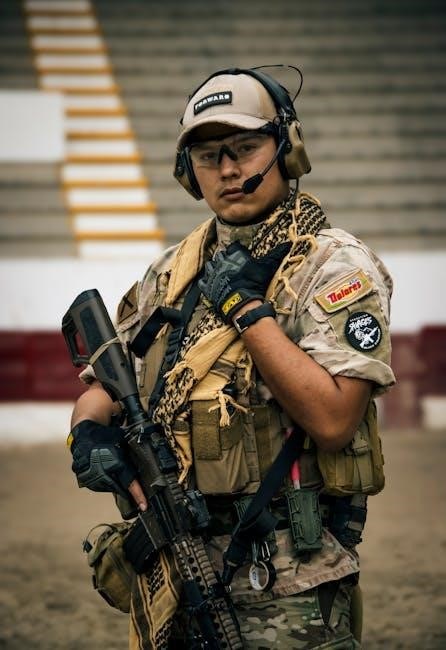
special forces a camp manual
This comprehensive manual details rigorous training, essential skills, and advanced techniques for prospective special operators, mirroring current global military practices and exercises.
It serves as a foundational guide, incorporating insights from programs like Robin Sage and Ukrainian special forces training, emphasizing adaptability and resilience.
The manual’s content reflects the evolving demands of modern warfare, including unconventional tactics, language proficiency, and trauma care in austere environments.
Purpose of the Manual
This manual’s primary objective is to provide a standardized, yet adaptable, training framework for individuals aspiring to join elite special forces units, mirroring the intensity of programs like those conducted by the GIGN and the U.S. Army John F. Kennedy Special Warfare Center.
It aims to bridge the gap between civilian fitness levels and the extraordinary physical and mental demands of special operations, outlining progressive conditioning programs – from endurance running and rucking to high-intensity interval training (HIIT) and calisthenics.
Furthermore, the manual serves as a resource for developing crucial skills, encompassing weapons handling, land navigation, survival techniques (SERE), and unconventional warfare tactics. It also highlights the importance of specialized modules, such as language training and advanced medical care.
Ultimately, this document intends to prepare candidates for the rigors of advanced training exercises, including deployments and collaborative efforts with international forces, like those observed with Ukrainian Special Forces, ensuring they are ready to operate effectively in diverse and challenging environments.
Target Audience: Aspiring Operators
This manual is specifically designed for individuals demonstrating a strong commitment to pursuing a career within special forces, encompassing those preparing for selection processes and initial entry training, mirroring the standards expected by units like the Nigerian Army’s special forces.
The intended audience includes physically fit candidates with a foundational understanding of military principles, but also those beginning their fitness journey, providing a progressive pathway to meet the demanding requirements. It caters to both domestic and international applicants seeking to enhance their preparedness.
It’s crucial that readers possess a high degree of self-discipline, resilience, and a willingness to embrace continuous learning, as highlighted by the rigorous nature of exercises like Robin Sage. A proactive mindset and dedication to mastering essential skills are paramount.
This resource is not intended for casual fitness enthusiasts, but rather for those genuinely dedicated to the challenges and responsibilities inherent in special operations, preparing them for potential deployments and collaborative training with allied forces.
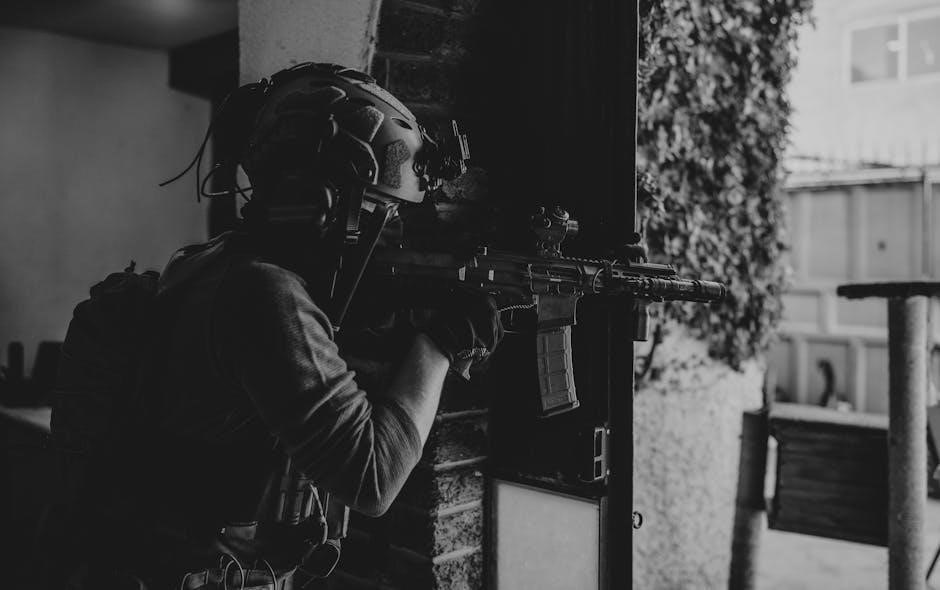
Physical Conditioning for Special Forces
Elite performance demands exceptional fitness. This section details a comprehensive program encompassing endurance, strength, HIIT, and calisthenics, preparing operators for intense physical challenges.
Endurance Training: Running and Rucking
Developing unwavering endurance is paramount for Special Forces operators, enabling sustained performance under extreme duress. Running forms the cornerstone, progressing from short, intense intervals to long-distance, multi-terrain efforts. Emphasis is placed on building cardiovascular capacity and mental fortitude.
Rucking, or weighted marching, simulates operational loads, building leg strength, back endurance, and overall resilience. Initial rucks begin with moderate weight over shorter distances, gradually increasing both load and distance. Variations include speed rucks and hill repeats to enhance anaerobic capacity.
Integrating both disciplines creates a synergistic effect, preparing operators for prolonged missions. Training schedules incorporate progressive overload, ensuring continuous adaptation and minimizing injury risk. Proper form and pacing are crucial, alongside adequate nutrition and recovery protocols. The GIGN workout exemplifies this intensity;
Strength Training: Foundational Exercises
A robust strength base is non-negotiable for Special Forces candidates, underpinning all physical capabilities. Foundational exercises prioritize compound movements, engaging multiple muscle groups simultaneously for maximum efficiency. The focus isn’t solely on maximal lifts, but functional strength applicable to real-world scenarios.
Core exercises – squats, deadlifts, bench presses, and overhead presses – form the bedrock of the program. These are supplemented with accessory movements like rows, pull-ups, and dips to address muscle imbalances and enhance overall stability. Proper form is paramount, minimizing injury risk and maximizing effectiveness.
Progressive overload is key, gradually increasing weight, repetitions, or sets over time. Periodization strategies are employed to prevent plateaus and optimize gains. Strength training complements endurance work, creating a well-rounded, resilient athlete capable of enduring prolonged operations.
High-Intensity Interval Training (HIIT)
High-Intensity Interval Training (HIIT) is crucial for developing the anaerobic capacity demanded by Special Forces operations. These short bursts of maximal effort, interspersed with brief recovery periods, mimic the unpredictable nature of combat. HIIT dramatically improves cardiovascular fitness, muscular endurance, and metabolic conditioning.
Typical HIIT protocols involve exercises like sprints, burpees, mountain climbers, and jumping jacks, performed at near-maximal intensity for 20-60 seconds, followed by equal or shorter recovery periods. The GIGN Special Forces workout exemplifies this, incorporating a circuit of demanding bodyweight exercises.
Adaptability is vital; HIIT sessions can be tailored to available equipment and terrain. The goal is to push the body to its limits, enhancing its ability to recover quickly and perform under extreme stress. Regular HIIT integration builds resilience and prepares operators for the physical rigors of deployment.
GIGN Special Forces Workout Example
The Groupement d’Intervention de la Gendarmerie Nationale (GIGN), France’s premier counter-terrorism unit, employs a notoriously demanding physical training regimen. Their workout exemplifies the blend of endurance, strength, and explosive power required for hostage rescue and high-risk operations.
A representative GIGN workout circuit includes an 800m run, immediately followed by 15 burpees, 20 handstand push-ups (HSPU), 25 toes-to-bar, 30 sit-ups, 75 pull-ups, 100 press-ups, and concluding with another 75 burpees. This is typically performed with minimal rest between exercises.
This brutal routine isn’t just about physical strength; it tests mental fortitude and the ability to operate under extreme fatigue. Scaling the workout to individual fitness levels is essential, but the core principle remains: relentless, high-intensity effort. Consistent execution builds the resilience necessary for prolonged operational deployments.
Calisthenics: The Core of Special Forces Fitness
Calisthenics forms the bedrock of Special Forces physical conditioning, emphasizing functional strength and body control without relying on external weights. This approach builds a resilient physique adaptable to diverse operational environments where access to gyms is limited or nonexistent.
Exercises like push-ups, pull-ups, sit-ups, and squats are staples, but advanced variations – handstand push-ups, muscle-ups, pistol squats – progressively challenge operators. These movements enhance core stability, crucial for maintaining form under stress and preventing injuries.
The emphasis isn’t solely on repetitions; it’s on perfect form and controlled movements. Calisthenics fosters kinesthetic awareness, allowing operators to efficiently utilize their body weight for climbing, traversing obstacles, and executing complex maneuvers. It’s a foundational element for peak performance.
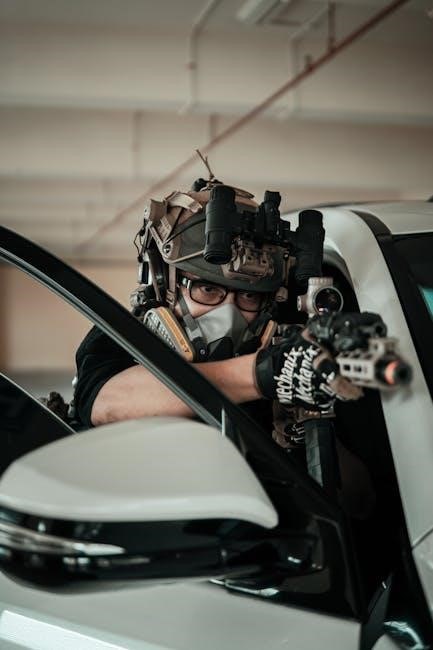
Essential Skills Training
This section focuses on mastering core competencies: weapons handling, land navigation, SERE techniques, and unconventional warfare tactics – vital for operational success and survival.
Weapons Handling and Marksmanship
Proficiency in weapons systems is paramount for any Special Forces operator. This module begins with a comprehensive review of weapon safety regulations, emphasizing the critical importance of responsible handling and preventative maintenance procedures for all assigned firearms.
Trainees will undergo extensive training with a variety of weapons, including pistols, rifles, carbines, and machine guns, learning proper disassembly, assembly, and malfunction drills. Marksmanship instruction progresses from basic target acquisition to advanced techniques like shooting on the move, positional shooting, and engaging targets in low-light conditions.
Emphasis is placed on achieving consistent accuracy and rapid target engagement under stress. Scenarios will simulate realistic combat situations, requiring operators to quickly assess threats and deliver precise fire. Furthermore, instruction includes the use of optics, lasers, and other weapon-mounted accessories to enhance performance and situational awareness.
Land Navigation and Map Reading
Mastering land navigation is crucial for operating effectively in any environment. This section begins with a thorough understanding of topographic maps, including contour lines, symbols, and grid systems. Trainees will learn to accurately orient maps, determine distances, and identify terrain features.
Practical exercises involve using a compass and protractor to plot courses, navigate to designated points, and account for declination. Instruction extends to utilizing GPS devices as a supplementary tool, understanding their limitations, and employing them effectively in conjunction with traditional methods.
Advanced training focuses on navigating in challenging conditions – at night, in limited visibility, and across varied terrain. Operators will practice dead reckoning, resection, and intersection techniques, honing their ability to maintain situational awareness and navigate independently. Emphasis is placed on route planning, obstacle avoidance, and emergency procedures.
Survival, Evasion, Resistance, and Escape (SERE) Training
SERE training prepares operators for the harsh realities of operating in hostile environments. This intensive course covers a wide range of skills essential for survival, beginning with procuring water and food from natural sources, building shelters, and creating fire. Emphasis is placed on utilizing available resources and adapting to challenging conditions.
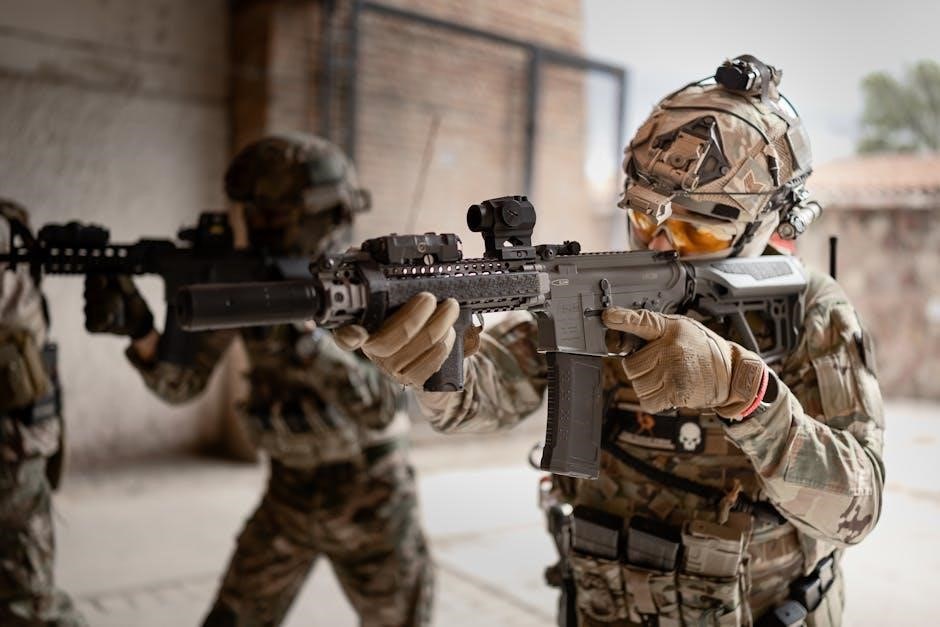
Evasion techniques focus on minimizing detection, utilizing terrain for concealment, and employing methods to avoid capture. Resistance training prepares individuals to withstand interrogation and maintain operational security. Escape procedures cover methods for breaking free from captivity and returning to friendly forces.
Realistic scenarios simulate various capture and survival situations, testing both physical and mental fortitude. Trainees learn to manage stress, maintain morale, and employ effective communication strategies. The ultimate goal is to instill the resilience and resourcefulness necessary to survive, evade, resist, and ultimately escape if compromised.
Unconventional Warfare Tactics
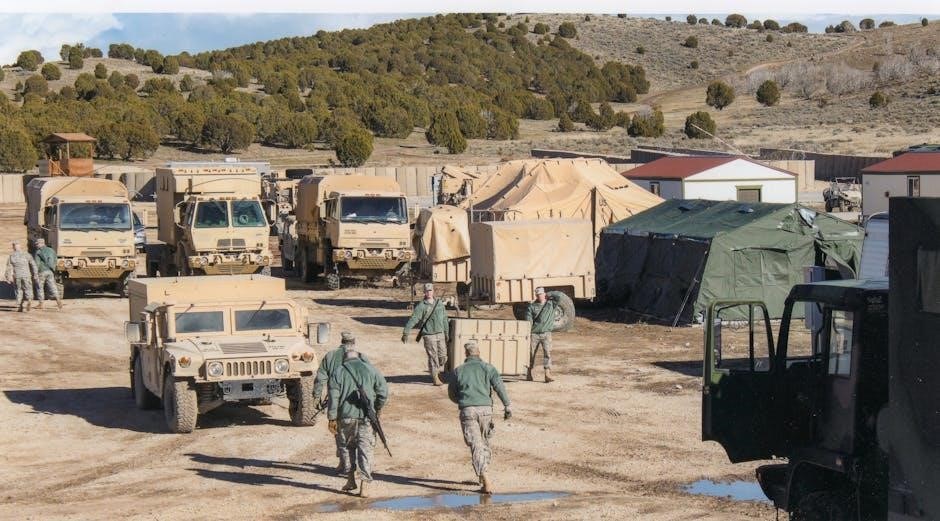
Unconventional Warfare (UW) focuses on employing indigenous resistance movements and irregular forces to achieve strategic objectives. This module details the principles of UW, including assessing the operational environment, identifying and vetting potential partners, and establishing secure communication networks.
Training emphasizes building rapport with local populations, understanding cultural nuances, and providing training and support to resistance groups. Operators learn to advise and assist in areas such as intelligence gathering, sabotage, and guerilla warfare tactics. The goal is to empower local forces to conduct operations independently.
UW tactics prioritize minimizing the footprint of external forces while maximizing the impact of indigenous efforts. This requires a deep understanding of political dynamics, logistical considerations, and the ethical implications of supporting irregular forces. Successful UW operations rely on discretion, adaptability, and a long-term commitment to building sustainable partnerships.
Specialized Training Modules
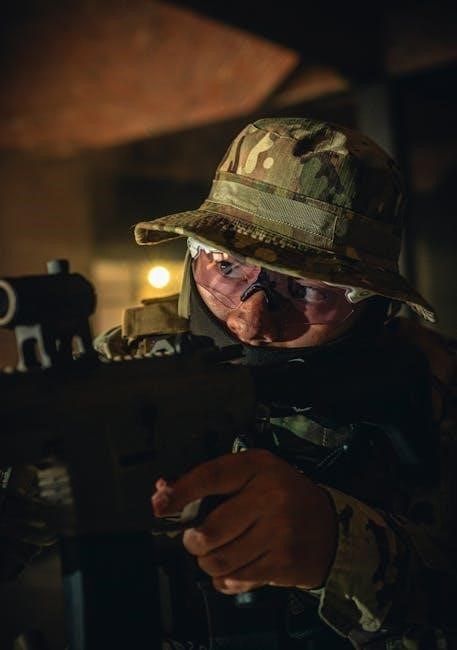
These modules refine operator skills in critical areas like language acquisition, advanced medical trauma care, close-quarters combat, and cultural sensitivity for mission success.
Language and Cultural Awareness Training
Effective unconventional warfare demands more than tactical proficiency; it necessitates a deep understanding of the operational environment’s linguistic and cultural nuances. This module prioritizes immersive language training, focusing on dialects prevalent in key geopolitical regions, preparing operators for seamless communication and rapport-building with local populations.

Beyond vocabulary and grammar, the curriculum delves into cultural protocols, social hierarchies, and non-verbal communication cues. Scenarios simulate real-world interactions, emphasizing respectful engagement and the avoidance of cultural faux pas that could compromise missions. Operators learn to discern subtle indicators of trust or hostility, enhancing their ability to gather intelligence and navigate complex social landscapes.
Furthermore, training incorporates historical context, religious beliefs, and prevailing political sentiments, fostering a holistic understanding of the target area. US special operators recently completed a vital training event, highlighting the importance of these skills, ensuring mission effectiveness and minimizing unintended consequences.
Medical Training: Trauma Care in the Field
Special Forces operators frequently operate in remote locations with limited or no access to conventional medical facilities. This module provides intensive training in trauma care, equipping operators to stabilize and treat casualties until evacuation is possible. The curriculum emphasizes prolonged field care (PFC), extending beyond immediate life-saving interventions.

Training covers a comprehensive range of skills, including wound management, fracture stabilization, burn treatment, and airway management. Operators become proficient in administering intravenous fluids, medications, and performing surgical procedures in austere conditions. Emphasis is placed on utilizing available resources creatively and improvising medical equipment when necessary.
Realistic scenarios simulate battlefield trauma, challenging operators to prioritize care under pressure and adapt to evolving circumstances. The training adheres to the latest Tactical Combat Casualty Care (TCCC) guidelines, ensuring operators are prepared to provide the highest standard of medical care in the most challenging environments.
Close Quarters Combat (CQC) Techniques
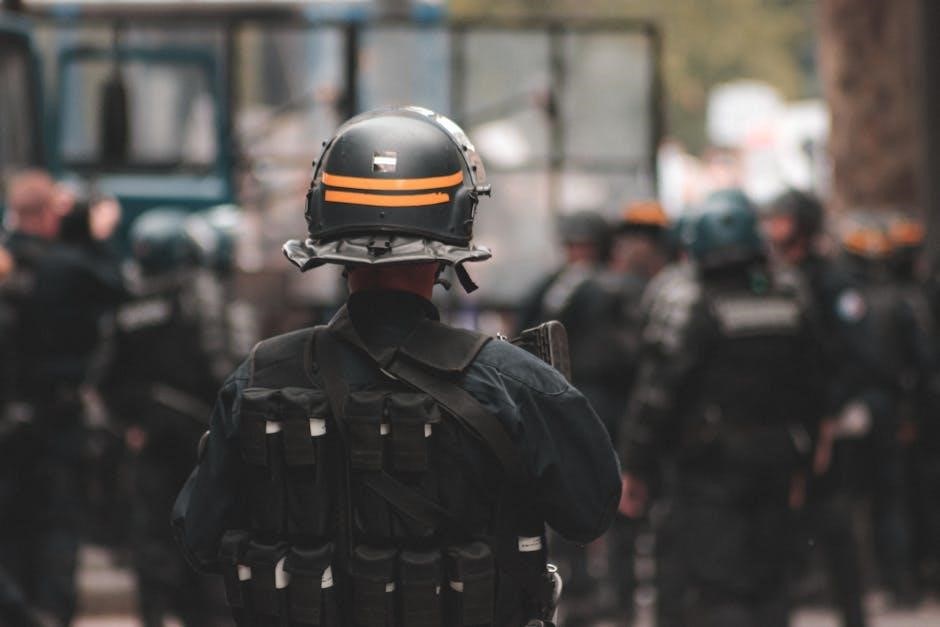
This module focuses on developing proficiency in close-quarters combat, essential for operations in confined spaces like buildings, vehicles, and tunnels. Training emphasizes speed, precision, and adaptability, preparing operators for dynamic and unpredictable engagements. The curriculum integrates various martial arts disciplines, firearms handling, and tactical movement techniques.
Operators learn to effectively clear rooms, navigate obstacles, and engage targets in close proximity. Emphasis is placed on teamwork, communication, and utilizing cover and concealment. Scenarios simulate realistic combat situations, forcing operators to make split-second decisions under stress. Drills include hostage rescue, VIP protection, and counter-terrorism tactics.
Advanced techniques cover weapon retention, disarming opponents, and utilizing improvised weapons. The training prioritizes minimizing collateral damage and adhering to the rules of engagement. Operators develop a deep understanding of situational awareness and threat assessment, enabling them to dominate close-quarters encounters.
Robin Sage Training Exercise Overview
Robin Sage is the culminating event for U.S. Army Special Forces candidates, a four-week field exercise held at Camp Mackall, North Carolina. It rigorously tests candidates’ abilities to survive, evade, resist, and escape capture, while simultaneously conducting unconventional warfare operations against a realistic opposing force (OPFOR).
The exercise simulates a deployed environment, requiring candidates to live off the land, establish contact with local populations, and build resistance networks. They plan and execute missions, facing constant challenges from the OPFOR, who employ sophisticated tactics to test their judgment and resilience. Candidates operate in small teams, relying on their training and leadership skills.
Robin Sage assesses not only tactical proficiency but also ethical conduct and adherence to the Special Forces Code. Successful completion signifies a candidate’s readiness to become a Green Beret, demonstrating their ability to operate independently and effectively in complex, high-stress situations. It’s a true test of character and capability.
Advanced Training and Exercises
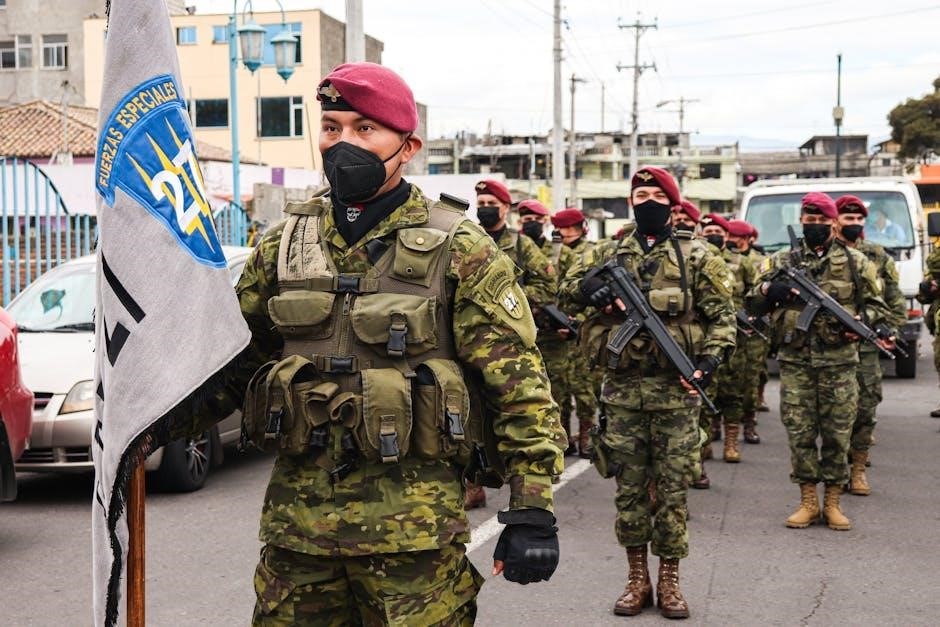
This section details complex military drills, including French deployment exercises and UK-supported Ukrainian special forces training, building upon foundational skills and operational readiness.
Military Exercises for Strength Building
Strength is paramount for special forces operators, demanding a training regimen beyond conventional weightlifting. Military exercises, designed for functional strength and endurance, are crucial components.
Burpee pyramids – increasing repetitions with each set – build explosive power and cardiovascular fitness. Similarly, incorporating High-Intensity Interval Training (HIIT) with exercises like mountain climbers and jump squats maximizes calorie burn and muscular endurance.
Rucking, carrying a weighted pack over varied terrain, develops lower body strength and mental fortitude. Complexes, combining multiple bodyweight exercises (push-ups, sit-ups, pull-ups) into a single flow, enhance muscular endurance and core stability.
Handstand push-ups (HSPU) and toes-to-bar exercises demand significant upper body strength and core control. These exercises, often incorporated into GIGN special forces workouts, are challenging yet highly effective. Finally, weighted dips and pull-ups build upper body pulling strength essential for obstacle navigation and breaching.
French Armed Forces Deployment Exercises
The French Armed Forces prioritize rapid deployment and operational readiness, conducting frequent exercises to maintain peak performance. These drills simulate real-world scenarios, focusing on swift response and coordinated action.
Recent exercises involved secret troop deployments to Ukraine, preparing for potential offensive actions from Belarus. These operations emphasize logistical planning, secure transportation, and establishing forward operating bases under pressure.
Training scenarios often include urban warfare simulations, requiring operators to navigate complex environments and engage targets in close quarters. Emphasis is placed on communication, teamwork, and adapting to dynamic situations.
Joint exercises with allied nations, like those supporting Ukrainian special forces, enhance interoperability and shared tactical understanding; These deployments test equipment, refine procedures, and build trust among international partners, ensuring a cohesive and effective response capability.
Ukrainian Special Forces Training (UK Support)
The United Kingdom has been a key partner in bolstering Ukraine’s special forces capabilities, providing extensive training programs tailored to counter modern warfare threats. This support focuses on enhancing operational effectiveness and resilience in a challenging conflict environment.
Training encompasses a wide range of skills, including advanced weapons handling, reconnaissance techniques, and unconventional warfare tactics. UK instructors emphasize adaptability, initiative, and the ability to operate independently behind enemy lines;
Recent reports highlight the success of UK-trained Ukrainian special forces in high-profile operations, such as attacks on the Crimea Bridge, demonstrating the effectiveness of the training provided.
The curriculum also includes elements of survival, evasion, resistance, and escape (SERE), preparing operators for potential capture and ensuring their ability to maintain operational security. This comprehensive approach aims to create a highly skilled and adaptable special forces unit capable of defending Ukraine’s sovereignty.